Turnfolk guide: Cities
How cities grow and what they give you.
What a city gives
- Gold: a city pays gold equal to its level every turn. The capital pays 1 extra.
- Land: a city owns the 6 hexes around it. You can buy more hexes next to its border: the first costs 10 gold, and each further hex costs 3 more than the last.
- Units: a city can recruit one unit per turn, and supports units equal to its level plus 1.
How a city grows
 A city grows when you build improvements on the land inside its borders. Each improvement adds its growth once, as soon as it is built.
- Level 12 to level 2
- Level 23 to level 3
- Level 34 to level 4
- Level 44 to level 5
- Level 54 to level 6
No level needs more than 4 growth. Extra growth carries over to the next level.
Improvements
 Farm
 4
+2 growth. Built on fertile plains.
Farming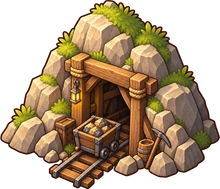 Mine4
+1 growth, +1 gold a turn. Built on ore hills.
Mining Lumber camp2
+1 growth. Built on forest.
Forestry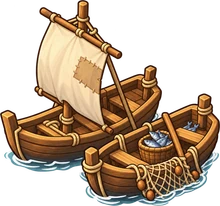 Fishing boats3
+1 growth. Built on fishing waters.
Forestry Mill5
+1 growth for each farm, mine, lumber camp or fishing boats next to it. One per city. Built on open plains next to other improvements.
Trade Market12
+1 gold a turn per 3 improvements, up to +2. Built in the city.
Trade Walls6
Doubles the defence of a unit in the city. Built in the city.
Masonry Monument14
+1 growth when built, then +1 score for every 2 turns it exists. One per city, and the city must be level 2 or higher. Each monument you already own makes the next one cost 4 more.
No craft neededLevel rewards
Each time a city reaches a new level, you pick one of two rewards.
Workshop: units recruited here cost 1 less
orBarracks: supports 1 more unit and sees further
Border growth: a second ring of land
orScholars: your next craft is free, except Siegecraft
Garrison: a free swordsman, and 2 soldiers cost no upkeep
orGuildhall: +2 gold a turn
Festival: +10 score
orSiege works: a free catapult, even over the unit limit
Capturing a city
- A unit can capture a village or an enemy city only if it started the turn standing on it. So capturing takes two turns: one to move in and one to capture. The owner gets a turn to respond. Scouts cannot capture.
- A captured city keeps its level and its land but loses its walls.
- When a capital is captured, its owner is out of the match: their units are removed and their other cities become neutral villages.